Lebanon's private health insurance conference: Who speaks for the policyholder?
Insurers, regulators, hospitals, insurance intermediaries and the pharmaceutical industry met to discuss the future of private health cover. In a year of premium increases, and with fewer people insured than before the crisis, one voice is not mentioned in the published account of who took part.
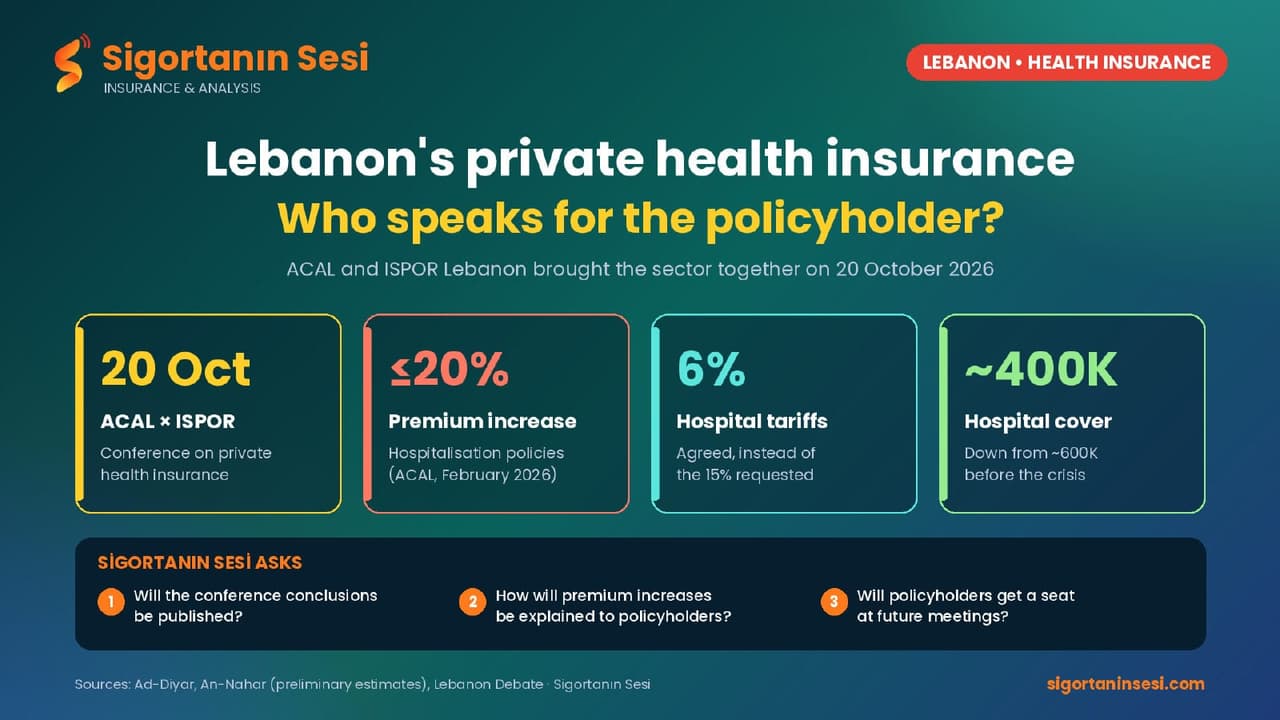
The Association of Insurance Companies in Lebanon (ACAL), together with the Lebanon chapter of ISPOR (the International Society for Pharmacoeconomics and Outcomes Research), held a conference on 20 October titled "The Reality of Private Health Insurance in Lebanon: Current Challenges and Paths for the Next Phase", Ad-Diyar reported.
According to the report, the conference brought together regulators, insurance companies, healthcare providers, insurance intermediaries, the pharmaceutical industry and private hospitals. The sessions covered the state of the private health insurance market, its structural and operational challenges, cooperation between stakeholders, and governance and accountability. The conference also focused on the importance of a shared vision for a more sustainable, resilient and responsive private health insurance system.
We thank ACAL and ISPOR Lebanon for bringing the sector's stakeholders around one table at a difficult time for health cover in Lebanon.
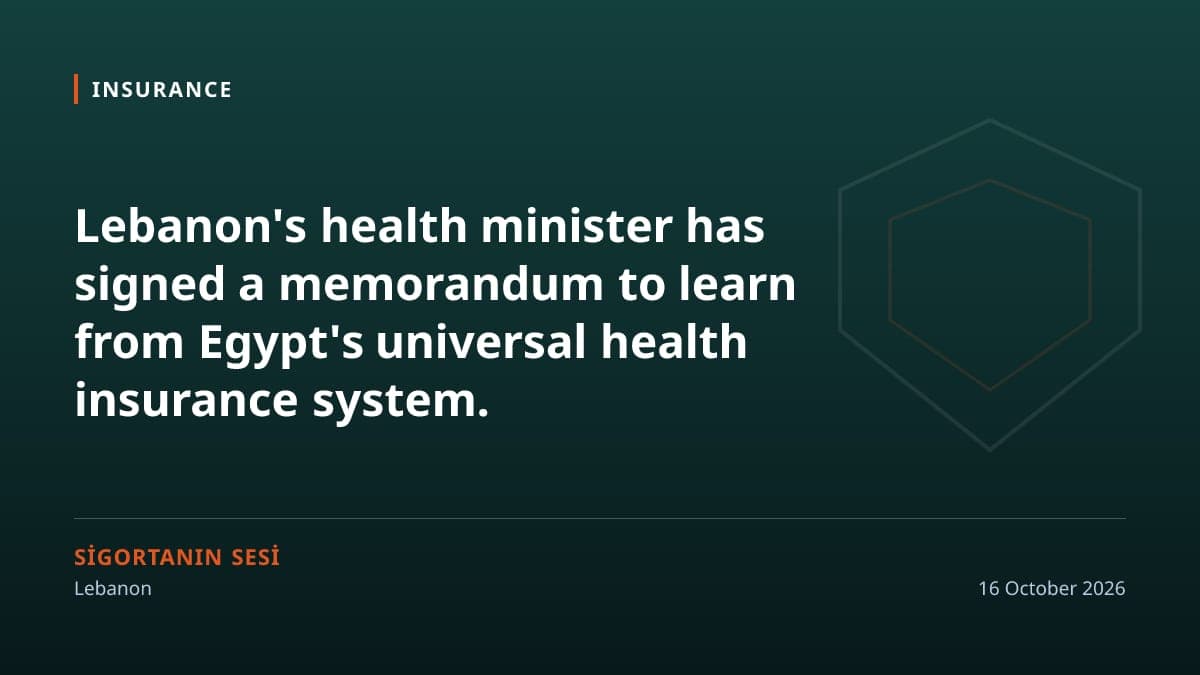
Read also: Lebanon looks to Egypt's universal health insurance model. Where do private health policies fit in?
THE MISSING SEAT AT THE TABLE
In our view, the most important stakeholder in private health insurance is the person who pays the premium. The published account of the conference lists the groups that took part but does not mention any representative of policyholders or patients.
In our view, this matters because 2026 has been a hard year for policyholders. In January, An-Nahar reported that some hospitals planned to raise their tariffs by 15 percent, and that the number of people with hospitalisation cover had fallen from around 600,000 before the crisis to around 400,000, according to preliminary estimates. In February, ACAL president Assaad Mirza said, as reported by Lebanon Debate, that hospitalisation policy prices would rise by no more than 20 percent, after an agreement with the hospitals' syndicate set their increase at 6 percent instead of the 15 percent requested.
Governance and accountability were on the conference agenda. In our view, accountability starts with explaining to the policyholder why the premium has gone up, what the policy covers and what it does not. A shared vision for the sector will be stronger if the people who rely on that cover can also be heard.
A conference is a useful first step. In our view, its value will be measured by what follows: published conclusions, concrete recommendations and a timetable.
OUR QUESTIONS
1. To ACAL: Will the conclusions and recommendations of the conference be published?
2. To ACAL: How will insurers explain the reasons behind health premium increases to policyholders?
3. To ACAL and ISPOR Lebanon: Are there plans to include policyholder or patient representatives in future meetings?
RIGHT OF REPLY
We are ready to publish the responses of ACAL and ISPOR Lebanon in full.
#Lebanon #HealthInsurance #ACAL #ISPOR #PrivateHealthCover #Policyholders #SigortanınSesi
Follow the sector at its source
Newsletter: regulatory changes, data and analysis — each one with its source shown.