IMF's conditions for Lebanon keep the financial gap law on the table – and insurers have a stake in it
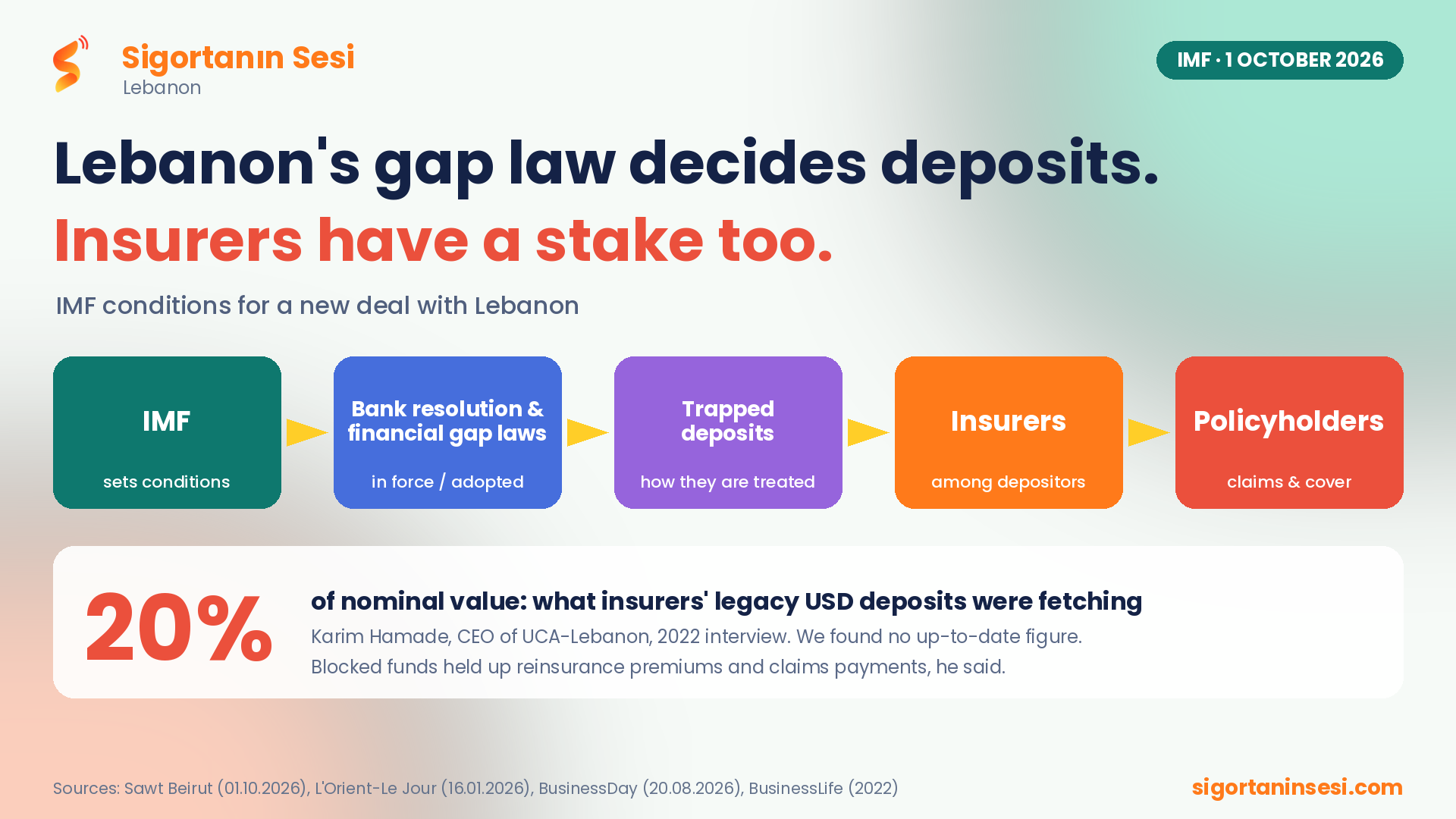
The International Monetary Fund said on Thursday, 1 October 2026, that Lebanon needs to continue implementing key reforms in its economic and banking sectors in order to reach a new support agreement with the Fund, following talks held by a Lebanese delegation with the Fund's management in Washington.
IMF spokesperson Julie Kozack told a press briefing that these reforms include bringing the bank resolution law into force and adopting appropriate laws to address the financial gap in line with international standards. She added that Lebanon also needs a 2027 budget and a medium-term fiscal framework consistent with public debt sustainability.
A PROCESS NOT YET COMPLETE
Read also: Lebanon launches free insurance initiative for Arab and foreign visitors
In January 2026, the IMF said it would not support the version of the financial gap law approved by the Cabinet in December, stating that it was not fully aligned with international standards and did not provide sufficient protection for depositors. The Fund called for key amendments to be made in cooperation with Parliament. In August 2026, the IMF welcomed changes to the bank law as a major step.
Kozack's latest remarks show that this process is not yet complete.
WHY THIS MATTERS FOR THE INSURANCE SECTOR
Lebanese insurers also have a stake in this issue. According to Karim Hamade, CEO of UCA-Lebanon, speaking in 2022, the local assets of insurers were severely impaired, with legacy US dollar deposits fetching 20% of their nominal value.
Hamade said that the Association of Insurance Companies in Lebanon (ACAL) had tried in 2020 and 2021, with the help of the Ministers of Economy, to open negotiations with the Central Bank to secure, in fresh dollars, part of the insurance companies' funds blocked in Lebanese banks. According to Hamade, these blocked funds prevented insurers from settling reinsurance premiums and paying claims to clients, pushing the sector towards US dollar-denominated policies from 2022.
Since the financial gap law will determine how trapped deposits are treated, its final version will also matter to insurance companies, which are among the depositors.
We have not found up-to-date data showing the size of insurers' funds still trapped in the banks, or how the law would treat corporate deposits.
OUR QUESTIONS
First: How much of the insurance companies' money remains trapped in Lebanese banks today?
Second: How will the financial gap law treat insurers' deposits, funds that stand against their obligations to policyholders?
Third: Will the Association of Insurance Companies in Lebanon be involved in the discussion before the final version of the law is adopted?
Today, the debate is about banks and depositors. But behind every trapped insurance company deposit, there is a policy and a policyholder waiting.
#Lebanon #IMF #FinancialGapLaw #insurance #LebanonInsurance #SigortanınSesi
Follow the sector at its source
Newsletter: regulatory changes, data and analysis — each one with its source shown.