Lebanon and the IMF discuss deposits this week. Who speaks for those who saved through life insurance?
Before the crisis, Lebanon's life insurance market collected $550–600 million a year in premiums. Today it is a fraction of that, and many policyholders have been unable to recover what their contracts promised. As Beirut and the IMF negotiate who absorbs the losses, where do these savers stand?
An International Monetary Fund mission led by Ernesto Ramírez Rigo arrived in Beirut on 9 November 2026, and talks opened at the Ministry of Finance on 10 November. Finance Minister Yassine Jaber, who heads the Lebanese negotiating team, said meetings would continue through Friday and expressed hope for a preliminary agreement this week. According to An-Nahar, Jaber said there was agreement on applying international principles and standards on the hierarchy of loss-bearing; Nidaa al-Watan summarised his position as "the state first, then the central bank, then the banks". Banque du Liban announced it would issue no media statements during the consultations and that the Finance Minister would announce the outcome at the end of the visit. We thank the Ministry of Finance for setting out the timetable of the talks.
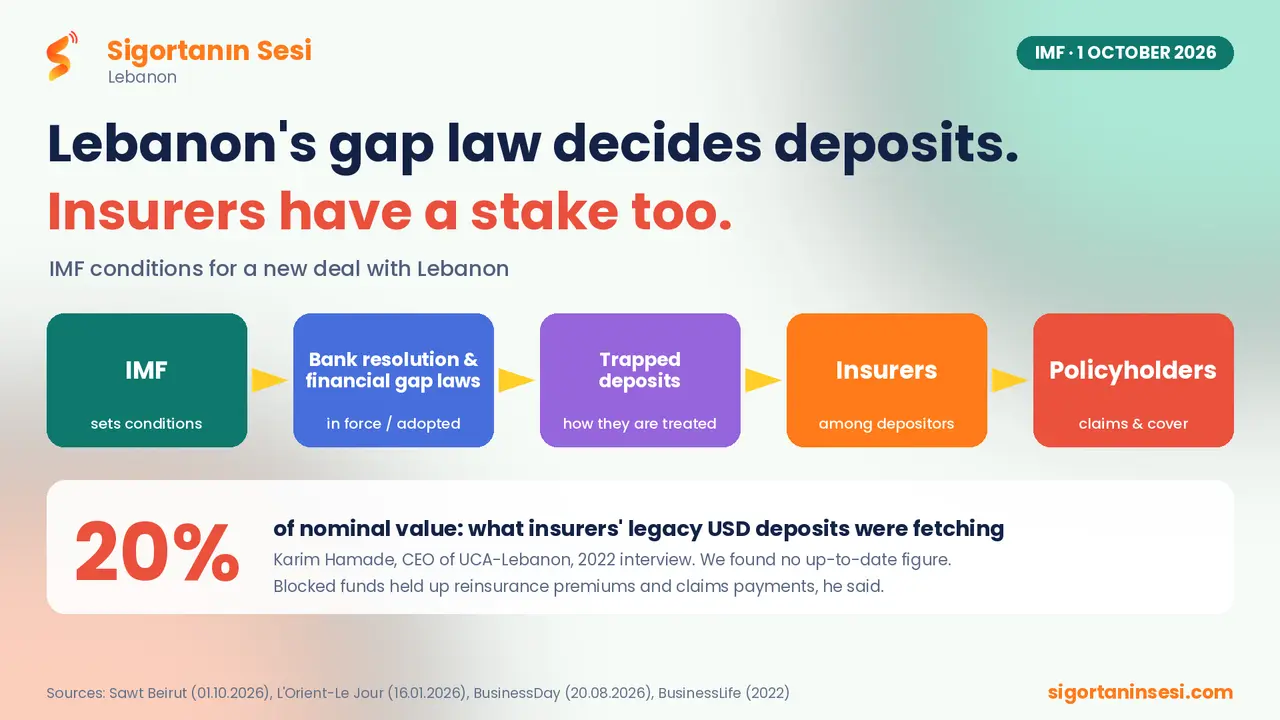
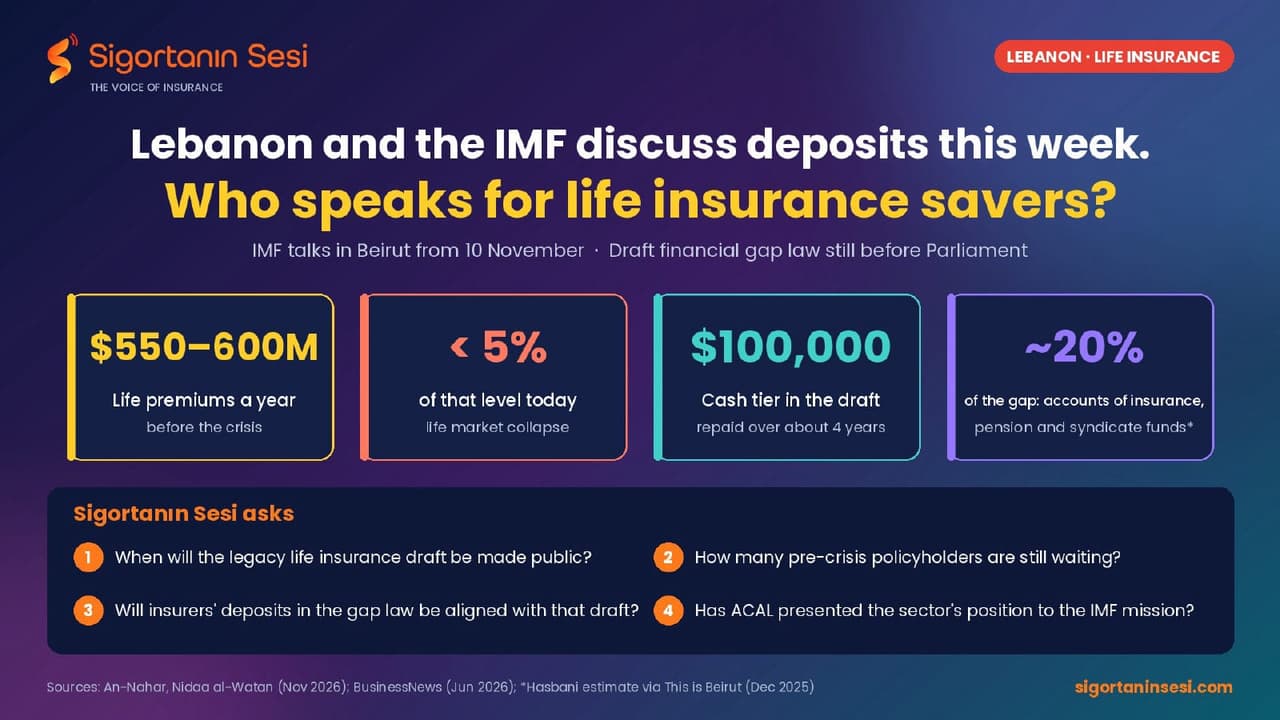
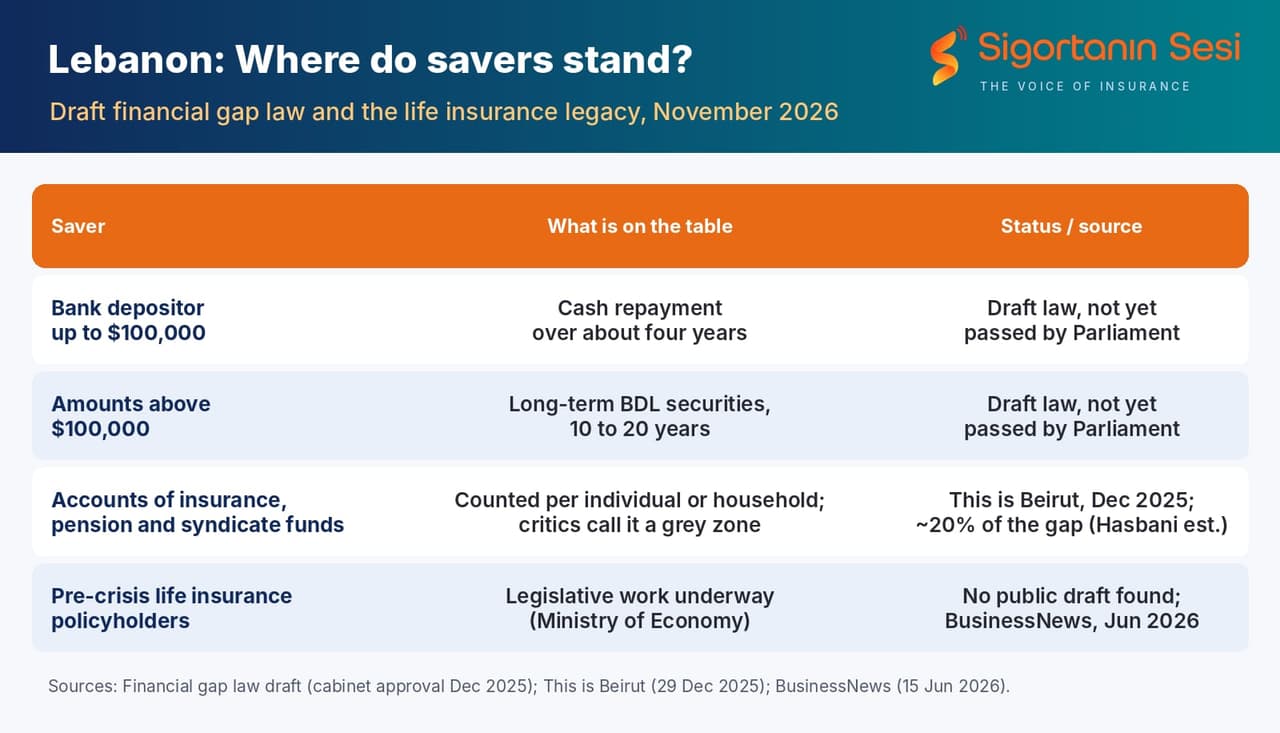
At the centre of the talks is the draft financial gap law, the bill on financial regularisation and deposit recovery that the cabinet approved in December 2025 and that is still before Parliament. Under the draft, deposits of up to $100,000 would be repaid in cash over about four years, while amounts above $100,000 would be converted into long-term Banque du Liban securities with maturities of 10 to 20 years.
The debate is about bank depositors. But many Lebanese families did not keep their savings only in bank accounts. They kept them in life insurance policies.
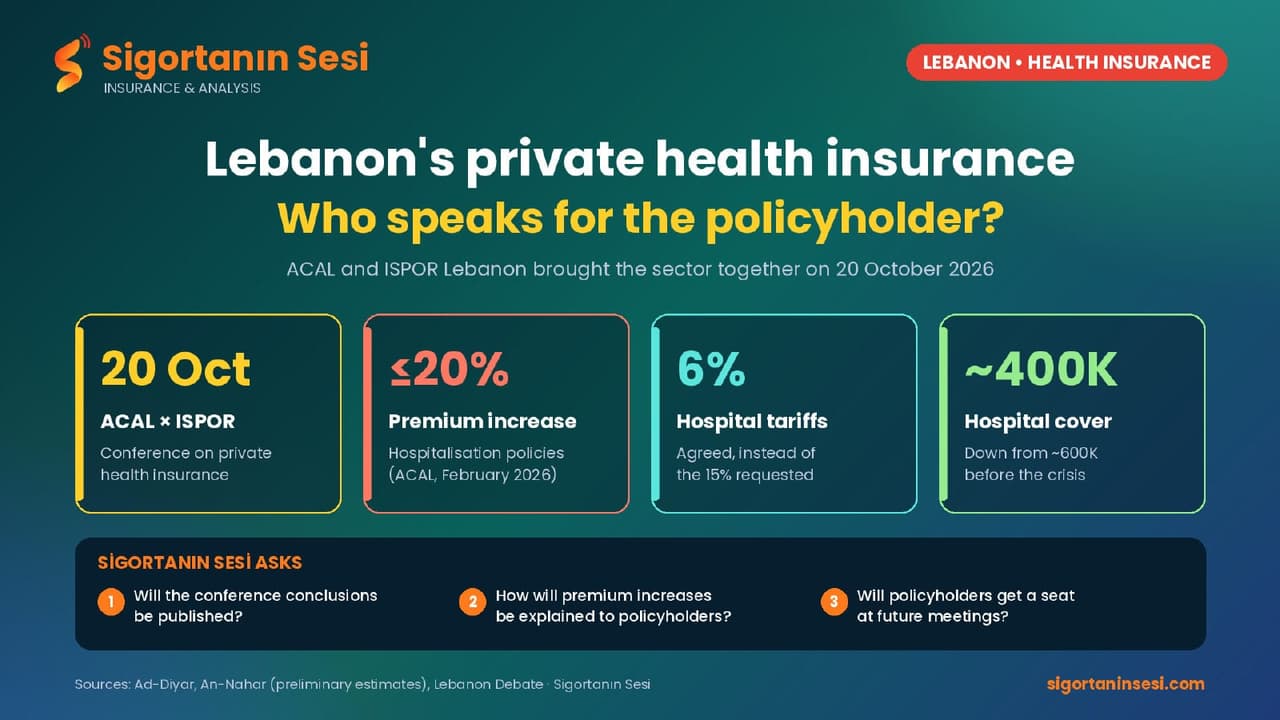
Read also: Lebanon's private health insurance conference: Who speaks for the policyholder?
A MARKET THAT ALMOST DISAPPEARED
According to BusinessNews's report of June 2026 on the insurance reform strategy presented by Economy Minister Amer Bisat, annual life insurance premiums stood at $550–600 million before the crisis and have since fallen to less than 5 percent of that level, leaving policyholders unable to recover their contracted funds. The report says legislative work is underway to address the collapse of the pre-crisis life market, together with unresolved claims from the 2020 Port of Beirut explosion.
The problem is not new. In 2022, L'Orient Today reported that policyholders who asked to surrender their life policies were often offered "lollars" (dollars locked in the banking system) rather than fresh dollars. Elie Nasnas, then president of the Association of Insurance Companies in Lebanon (ACAL), said ACAL was aware of these practices and that they were "against regulations". The acting head of the Insurance Control Commission, Elie Maalouf, said at the time that for unit-linked policies invested abroad at the client's request, "there is no excuse for insurers not to pay back their clients in fresh US dollars".
A GREY ZONE IN THE DRAFT
A life policyholder's claim is against an insurer, not a bank. The insurer, in turn, holds part of its assets as deposits in Lebanese banks. That puts the policyholder two steps away from the deposit recovery framework.
According to This is Beirut, critics of the draft say the way the first $100,000 is counted, per individual or household rather than per account, creates a legal grey zone for accounts belonging to businesses, professional syndicates, insurance funds and pension schemes. Lebanese Forces MP and former deputy prime minister Ghassan Hasbani estimated that such accounts represent roughly 20 percent of the gap. None of the reports on the draft that we reviewed mention life insurance policyholders. We could not find a published draft of the legislation on legacy cases.
OUR VIEW
A deposit recovery framework that settles bank accounts but does not clearly address life insurance savings risks treating two groups of savers differently for the same loss. A family that kept $50,000 in a bank and a family that put $50,000 into a savings policy both trusted the same financial system. Their outcomes should not depend on the type of contract they signed. As this week's IMF meetings continue, the legacy life insurance file deserves a place in the same discussion, with a clear timetable.
OUR QUESTIONS
To the Ministry of Economy and Trade and the Insurance Control Commission: 1. When will the draft legislation on legacy life insurance policies be shared with the public? 2. How many pre-crisis life policyholders are still waiting to recover their contracted funds, and what is the total amount? 3. Will the treatment of insurers' deposits in the financial gap law be aligned with the legacy life insurance legislation?
To the Association of Insurance Companies in Lebanon (ACAL): 4. Has the insurance sector presented its position on the financial gap law to the government or the IMF mission?
RIGHT OF REPLY
Sigortanın Sesi is ready to publish in full any statement from Lebanon's Ministry of Economy and Trade, the Insurance Control Commission, ACAL and other relevant institutions. For responses and comments: info@sigortaninsesi.com
#SigortanınSesi #Lebanon #LifeInsurance #IMF #FinancialGapLaw #Depositors #InsuranceReform #ACAL
Today's insurance news in your inbox every evening
On days when new stories are published on the site, one email at 18:00 Turkey time. Unsubscribe at any time.