Insurers' $1.7 billion: whose money is it?
Lebanon's insurance regulator said in November 2025 that insurers were among the major depositors in Lebanese banks, with more than $1.7 billion. As talks with the IMF move to how deposits will be repaid, one question remains open: is that money the insurers' or their policyholders'?

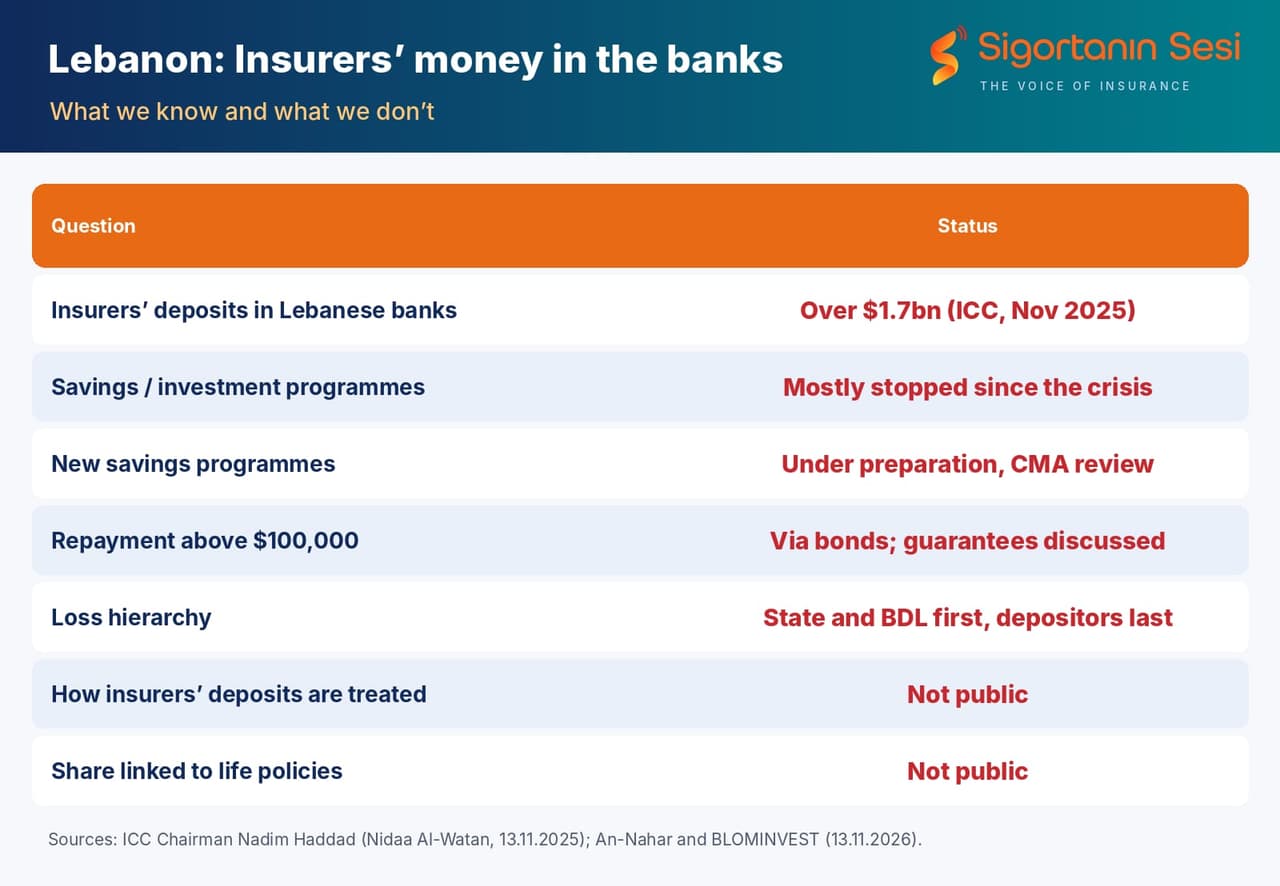
In October, we wrote that no recent figure was available for how much of Lebanese insurers' money is trapped in local banks. We have since found that the regulator had already given one. Nadim Haddad, Chairman of the Insurance Control Commission (ICC), the supervisory body under the Ministry of Economy and Trade, told Nidaa Al-Watan in November 2025 that insurance companies are "among the major depositors, with amounts exceeding $1.7 billion in Lebanese banks." We thank the Insurance Control Commission for having put a figure on the record.
Haddad also said that most investment and savings programmes stopped after the banking crisis. Some companies are now preparing programmes to revive this part of the market, and any new programme will only take effect after it is reviewed together with the Capital Markets Authority.
WHY THIS MATTERS NOW
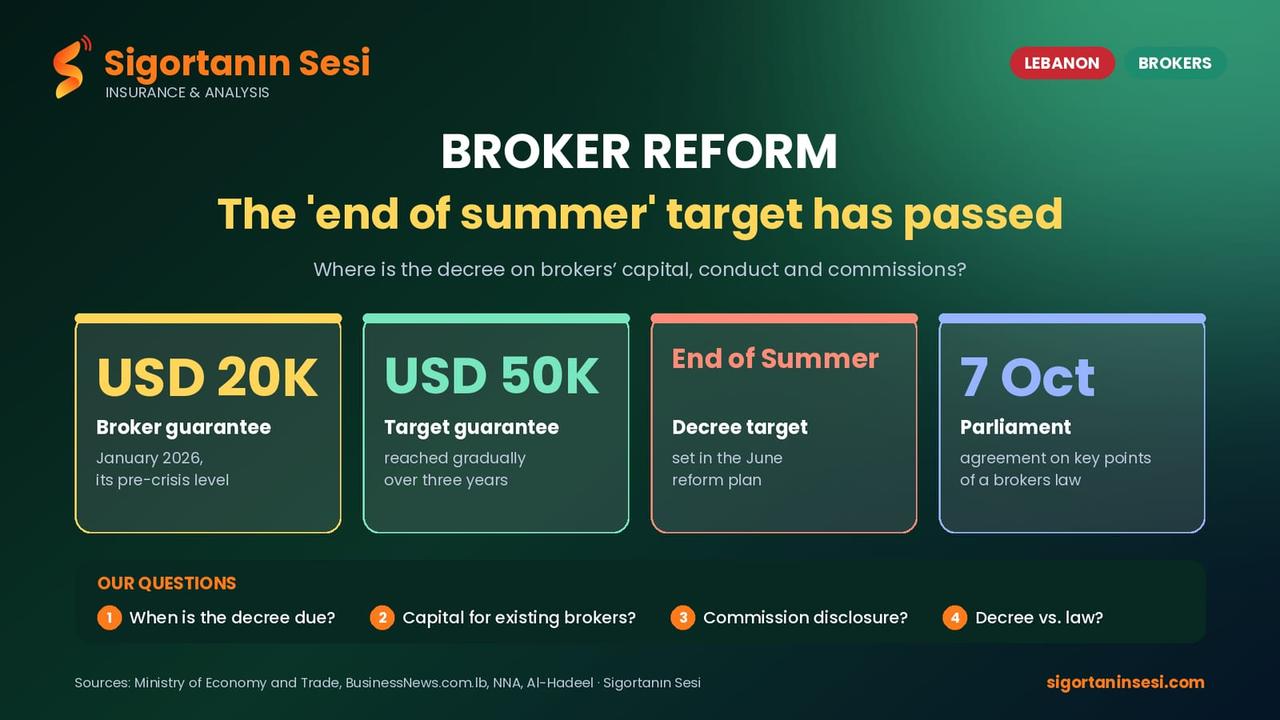
Read also: Lebanon's Insurance Reform: The Summer Deadline Has Passed. Where Are the Rules?
The question has become urgent this week. An IMF mission held talks in Beirut from Tuesday to Friday this week on the strategy for the bank resolution law, and the IMF said more work is needed to reach an agreement on bank restructuring. Finance Minister Yassine Jaber announced that a small committee would continue the work and said he hoped the financial gap law would be passed before March.
According to An-Nahar, the talks have moved from defining the financial gap to the mechanics of repaying deposits. One of the main open issues is how amounts above $100,000 would be repaid through bonds issued to depositors and backed by real guarantees; earmarking a quarter, not all, of Lebanon's gold reserves as collateral for these bonds has been proposed. BLOMINVEST reported that the Finance Minister confirmed a loss hierarchy in which the state and Banque du Liban bear losses first and depositors last.
THE QUESTION STILL UNANSWERED
An insurance company's bank deposit is not like an individual's savings account. Part of such deposits typically represents technical reserves set aside to pay claims and, for life and savings policies, money owed to policyholders and their beneficiaries. The ICC figure does not say how much of the $1.7 billion falls into each category. If the repayment rules are designed around individual depositors and a threshold such as $100,000, an insurer holding large sums on behalf of many policyholders could be treated as a single large depositor.
We could not find any public statement on how the draft law will treat deposits held by insurance companies. This is not a technical detail: the answer could determine whether the savings of life insurance policyholders are treated as small savings or as part of a large institutional deposit.
OUR VIEW
Putting a figure on insurers' trapped deposits was an important step towards transparency. The next step is to make sure that the people behind that figure are explicitly considered when the repayment rules are written. Life and savings policyholders entrusted their money to insurers, and insurers entrusted it to banks. A clear provision in the financial gap law on deposits held by insurers on behalf of policyholders would protect both, and would help rebuild confidence in a market that is trying to restart its savings products.
OUR QUESTIONS
To the Insurance Control Commission (ICC): 1. What is the current amount of insurance companies' deposits in Lebanese banks? How much of it relates to life and savings policies? 2. Has the Commission submitted a position on how deposits held by insurers should be treated in the draft financial gap law?
To the Association of Insurance Companies in Lebanon (ACAL): 3. Has ACAL been consulted on the draft law? Is the sector asking for deposits held on behalf of policyholders to be treated differently from ordinary institutional deposits?
To the Ministry of Finance: 4. Does the draft law include a specific provision for deposits held by insurance companies on behalf of policyholders?
RIGHT OF REPLY
Sigortanın Sesi is ready to publish in full any statement from the Insurance Control Commission, the Ministry of Finance, the Ministry of Economy and Trade, Banque du Liban, the Association of Insurance Companies in Lebanon and insurance companies. For replies and comments: info@sigortaninsesi.com
#SigortanınSesi #Lebanon #Insurance #LifeInsurance #Deposits #FinancialGapLaw #IMF #Policyholders
Today's insurance news in your inbox every evening
On days when new stories are published on the site, one email at 18:00 Turkey time. Unsubscribe at any time.