The thinnest link in the chain

Insurance regulation in Lebanon picked up pace in the first nine months of 2026. But the pace is not the same at every link. The obligations falling on the intermediary have a date, an amount and a deadline; the capital reform falling on the insurer is still a tender file.
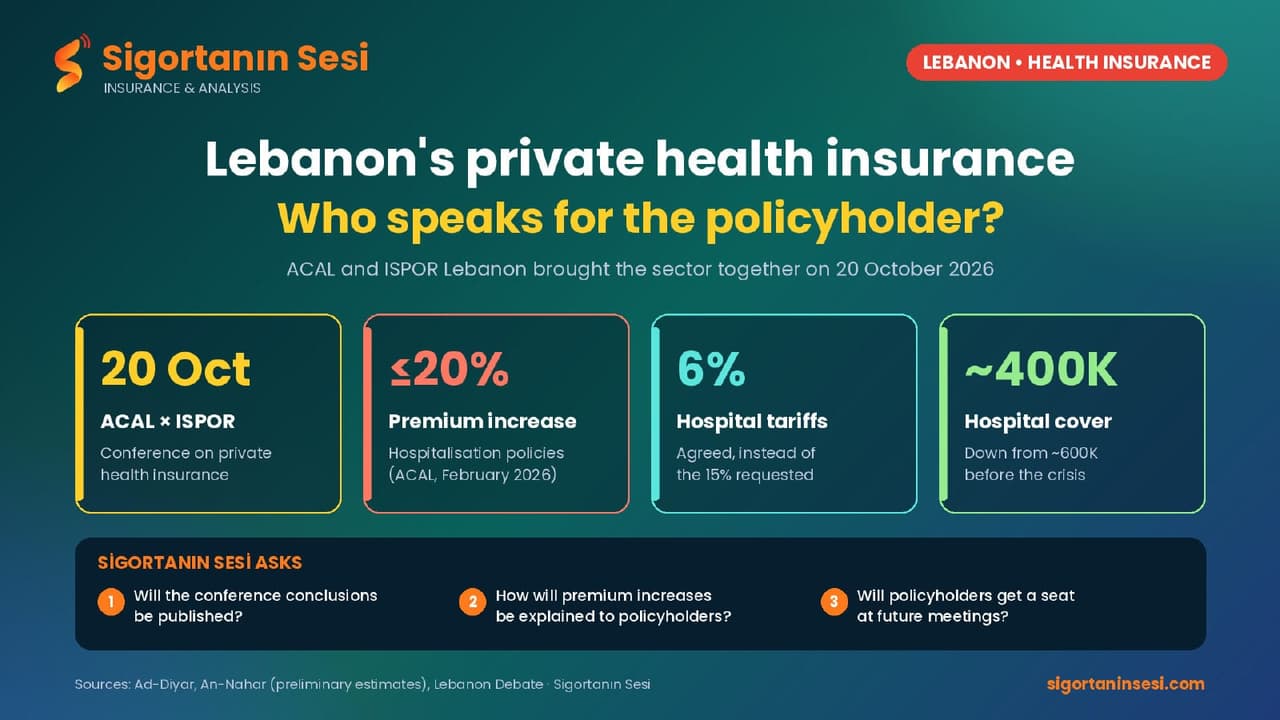
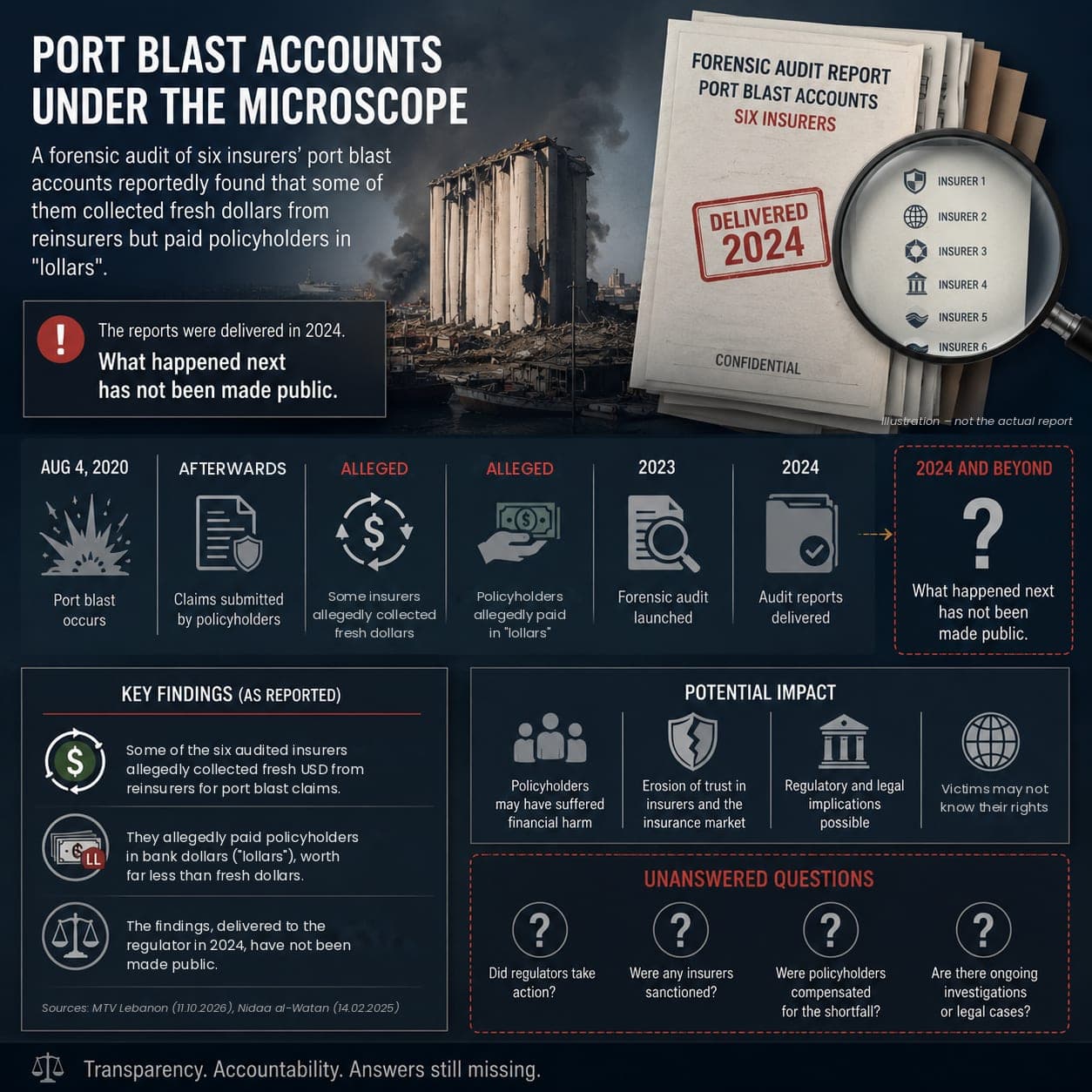
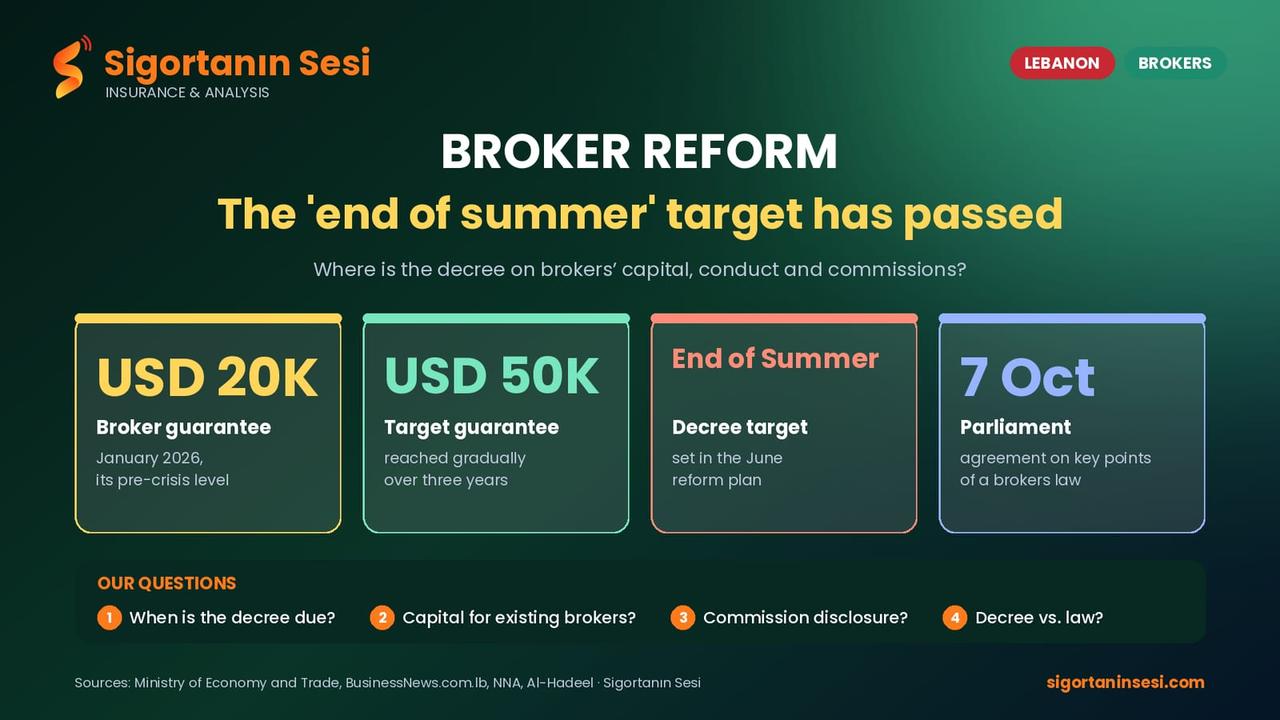
This issue carries four reports from Lebanon. All four come from the same commission and from within the same year. Placed side by side they say one thing: regulation is advancing, but at different speeds along different links of the chain.
Consider the sequence. In January a tender was opened for technical support in setting the minimum capital; in February the terms of reference were issued; in March the submission period was extended. The first quarter of the year was thus spent not on the capital reform itself but on selecting the consultant who will prepare it. What exists today is not a capital figure but a method of work.
Read also: Dates without numbers
On the intermediary side the picture is different. In February the tariff compliance circular went out: an intermediary may make no addition to or modification of the official tariff, failing which the maximum penalties apply. In July the bank guarantee was reset and published in the Official Gazette; the amounts were tiered by the number of delegates, and existing intermediaries were given until 31 December 2026 to comply. In between, in February and March, the names of intermediaries that had not met licence renewal requirements were published in lists.
Three measures, three months, one addressee. The intermediary faces a concrete amount, a concrete date and a public list on which a name may appear. The insurer faces a technical specification.
This need not be read as a criticism. Resetting a capital threshold is not done by writing down a figure; demanding a quantitative impact study, extending the tender and opening the bids in due form are marks of seriousness. Raising an intermediary's guarantee, by contrast, can be done in a single decision. By their nature one is slow and the other quick.
But that does not change the outcome. Throughout 2026 the visible face of supervision has been the intermediary. It is the intermediary who deals with the market, whose name may appear on a public list, and who must renew a guarantee. On the insurer's side no public obligation has yet arisen.
There is a risk in this. The longer the capital side is delayed, the more the tightening on the intermediary side stands alone. If the seller of the policy is supervised while the paying capacity of the company carrying it is not addressed on the same timetable, the protection reaching the policyholder remains incomplete. An intermediary's guarantee secures a receivable arising from intermediation; it is the company that pays the claim.
The second issue is the timetable. The 31 December 2026 date given to existing intermediaries will produce a winnowing in the market at the end of this year. A guarantee that rises by ten thousand dollars a year to fifty thousand is a burden that will press on the small intermediary. The one hundred and four entries in the February and March lists show that there were already intermediaries unable to meet renewal requirements before the guarantee even took effect. The picture will be clearer at year end.
This does not mean consolidation is an evil in itself. A smaller number of intermediaries is in the policyholder's interest if it means the remaining ones are sounder. Provided the winnowing separates those who do the job properly from those who do not, rather than merely those who can pay the guarantee from those who cannot.
Third, the quiet message of the tariff circular. If the Commission felt the need to remind intermediaries that they may not add to the official tariff, it knows that the opposite has been happening in the field. Some of the texts on which the circular rests date from 1968, 1977 and 1978. The rule, in other words, is not new; the reminder is.
The picture that emerges is this: insurance supervision in Lebanon became a subject of discussion again in 2026, and it addressed its first word to the intermediary. The capital threshold is next. The tender process that began in January reached the opening of bids in mid-March. What follows will depend on when the figure emerging from that study takes effect, and with what transitional period.
A chain carries only as much as its thinnest link. But thickening the thinnest link cannot be a reason to postpone taking the measure of the others.
Follow the sector at its source
Newsletter: regulatory changes, data and analysis — each one with its source shown.